

Rethinking African Mobility: Past Lessons, Present Realities, Future Possibilities
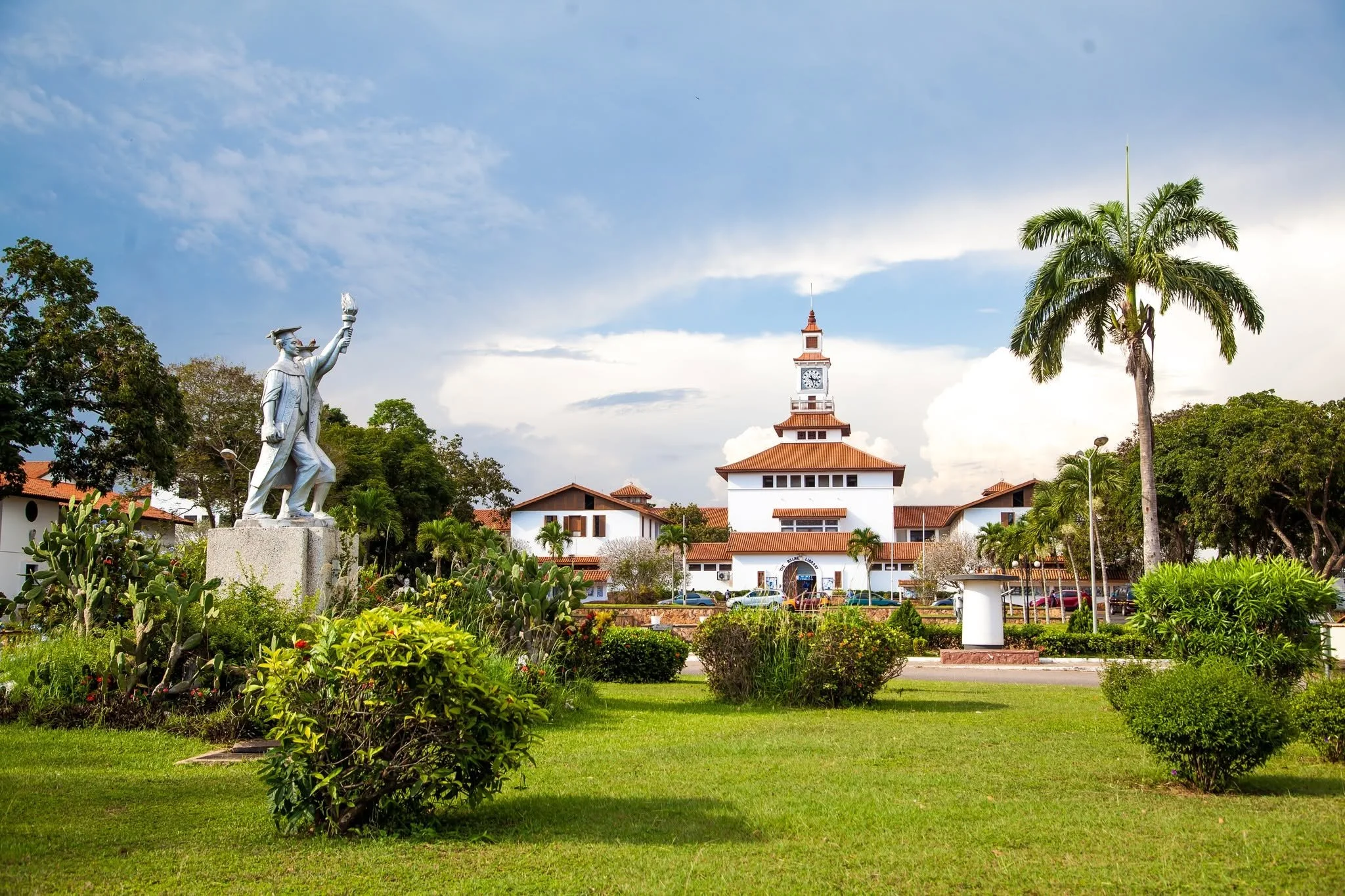
Hosted at the University of Ghana in Accra, the conference will bring together leading scholars, policymakers, and practitioners from around the world to discuss emerging migration trends, policy challenges, and opportunities for mobility-driven development.
The conference program will feature plenary discussions, roundtables, and parallel sessions addressing some of the most pressing migration issues today. Topics include migration governance in Africa, forced displacement and humanitarian crises, externalized border controls, labour mobility and regional integration, migration and development, migration and health, and diaspora engagement.
Invited speakers include representatives from regional and international institutions such as the African Union, ECOWAS, and World Health Organization, alongside prominent migration scholars and policy experts from universities and organizations across Africa, Europe, Asia, and the Americas.
Invited speakers include:
Prof. Anna Triandafyllidou — Toronto Metropolitan University, Canada
Prof. Mary Boatemaa Setrana — Director of the Centre for Migration Studies at the University of Ghana
H.E. Wamkele Mene – Director General, African Continental Free Trade Area (AfCFTA) Secretariat
Violet Roumeliotis (AM, GAICD) — CEO of Settlement Services International (SSI), Australia
Dr. Ibrahima Amadou Dia — Director, African Centre for the Study and Research on Migration (ACSRM)
Prof. Opportuna Kweka — IDRC Research Chair, University of Dar es Salaam, Tanzania
Prof. Diego Acosta — University of Bristol
Prof. Paula Banerjee — IDRC Research Chair on Gender and Forced Displacement, Asian Institute of Technology
A full list of invited speakers and tentative conference proceedings will be available soon.
About the Conference
Key Info
Dates: 18-20 November, 2026.
Location: University of Ghana, Accra | Format: In-person only
Call for papers: CLOSED
Contact: Dr. Irina Isaakyan at info@metropolisintl.org
About the Theme
The theme of the 2026 Metropolis International Migration Network Conference is “Rethinking African Mobility: Past Lessons, Present Realities, Future Possibilities.”
While the conference theme centers on African mobility, we warmly welcome submissions on ANY topic related to international migration worldwide, including comparative, regional, and global perspectives.
Schedule
Wednesday, 18th November, 2026
Opening Ceremony
9:30-10:00 Arrival of Guests, Exhibition, Registration, & Ghana Dance Ensemble
10:00-10:10 Ghana National Anthem by Ghana Police Band and the African Union Anthem
Welcome Remarks
10:10-10:15 Professor Mary Boatemaa Setrana, Director, Centre for Migration Studies, University of Ghana, Ghana
10 :15-10 :20 Professor Anna Triandafyllidou, Chair, Metropolis International Network, Toronto Metropolitan University, Canada
10:20-10:25 Prof. Nana Aba Appiah Amfo, Vice Chancellor, University of Ghana
10:25-10:30 H.E. Mahmoud Ali Youssouf, Chairperson, African Union Commission
Opening Remarks
10:30-10:35 Hon. Muntaka Mohammed-Mubarak Minister of Interior, Republic of Ghana
10:35-10:45 His Majesty King Mohammed VI, King of the Kingdom of Morocco
10:45-10:55 Artistic Performance — School of Performing Arts
Keynote Address
10:55-11:05 H.E. John Dramani Mahama — President of the Republic of Ghana
11:05-11:15 Group Photo
11:15-11:20 Musical Interlude – Music Department — School of Performing Arts
11:20-12:00 Break
Opening Plenary
Migration Governance in Africa: Current Realities and Future Directions
Migration governance in Africa remains the prerogative of the states despite significant initiatives from the African Union and from regional bodies to improve coordination and implement smooth labour and family migration across borders. Migration governance in Africa is also negatively influenced by external priorities, most notably those of the EU, which tend to make borders less permeable damaging cross border regional economic activities and trade opportunities. Future directions include more coordination at the regional level within the different African regions, aiming at mutual benefit of countries of origin and destination, recognising the importance of migration for the continent’s economic growth. This panel focuses on the potential that regional and transnational migration governance holds for Africa as well as to the need for focusing more on migrants themselves and not just on institutions.
12:00-13:30 Chair: Benard Avle, Journalist, Citi FM, Ghana
Speakers:
Rethinking African migration narratives: Promises and pitfalls of a decolonial approach / Dr Ibrahima Amadou Dia, Director, African Centre for the Study and Research on Migration (ACSRM)
Amb. Dr. Abdel-Fatau Musah, Commissioner for Political Affairs, Peace and Security, ECOWAS OR Dr Kalilou Sylla, Commissioner of Economic Affairs and Agriculture, ECOWAS
Mr David Ofosu-Dorte, Executive Chairman, AB and David Law
Integrating migrant experiences into migratino Governance processes/Dr Linda Oucho, AMADPOC, Nairobi
Morocco’s Hybrid Governance of Mobility: Externalization, Border Management, and Migrant Experiences / Prof Myriam Cherti, IDRC Research Chair in Forced Displacement, Mohammed VI Polytechnic University, Morocco
13:30-14:30 Lunch
14:30-16:00 Parallel Sessions 1
16:00-16:30 Break
Plenary Session 2a
Borders and the Externalization of Migration Governance
Migration controls and migration management have been increasingly externalised during the last ten years. Major destination countries withhold development aid and tie visa regimes to origin and transit countries capacity to prevent migrants from leaving. These pressures have created important challenges around the world as they have disrupted regional economies that relied on cross border movement, they have exposed migrants in transit into severe human rights violations while trapped in intermediary migration destinations, and they have enhanced the role and power of criminal networks that smuggle migrants through borders or that exploit migrants in waiting. This panel brings together experts from Latin America, North and West Africa discussing the dynamics of border externalisation and proposing alternative solutions to managing international migration.
16:30-18:00 Chair: Dr Faisal Garba, Associate Professor of Sociology, Migration and Mobility, The Africa Institute; University of Cape Town
Speakers:
Externalization: Another brick in the wall of exceptionalism / Prof Pablo Ceriani Cernadas, National University of Lanús, Buenos Aires
African responses to deportation pressures / Dr Franzisca Zanker, Researcher, Arnold-Bergstraesser Institute, Germany
Asylum and protection mercenarism: Effects of European externalization on African migration governance / Dr Leander Kandilige, Associate Professor, Centre for Migration Studies, University of Ghana
Invisible walls: Externalization, governance and the US-Mexico migration nexus / Professor Silvia Núñez, Universidad Nacional Autónoma de México, Mexico
Government of Burundi Representative
Plenary Session 2b
Forced Displacement, Humanitarian Crises and Development
The last few years have been characterized by the prolongation of long-standing humanitarian crises and conflicts like in Sudan, Eritrea, but also Syria, Venezuela or in relation the Rohingya in south Asia. At the same time, new conflicts are erupting around the world, notably in Iran or Ukraine that create both internal and international displacement. While some positive developments have been noted in relation to Venezuelan or Ukrainian refugees who have offered broader protection schemes in Latin America and Europe respectively, there is a growing reluctance among major destination countries to welcome refugees. A trope of ‘responsibility’ has marked asylum and refugee debates where countries neighbouring a conflict region are expected to be responsible for hosting those displaced, civil society is also expected to fill the gaps that decreasing funding for international assistance has left, while refugees themselves are expected to be ‘responsible’ for their own lives – to be self-reliant. This panel takes stock of the dynamics from different regions including South and Southeast Asia, East and West Africa, and Europe and the Middle East to discuss what are the most important developments in the field and what are some lessons for the future.
9:00-10:30 Chair: Prof. Mary Boatemaa Setrana, IDRC Chair, University of Ghana
Speakers:
Humanitarian approaches to educating children when schools become IDP shelters: Experiences from Gaza and Lebanon / Prof Sawsan Abdulrahim, IDRC Chair Lebanon, American University of Beirut, Lebanon
Humanitarian aid and regional development in East Africa / Prof Opportuna Kweka, IDRC Research Chair on Forced Displacement, University of Dar Es Salaam, Tanzania
From coercion-centred return governance to responsible return governance Perspective / Prof Zeynep Sahin Mençutek, IMIS, University of Osnabrueck, Germany
Experience of Forced Displacement Go Metropolitan Governance in the IGAD Region: Challenges in Sustaining Sound Local Policy and Practice Initiatives that are Dependent on Global Finance / Prof Abebaw Minaye, IDRC Research Chair, Forced Displacement and Migration Studies Centre, Addis Ababa University, Ethiopia
Conflict, violence and climate related crisis / Amala Obiokoye, Head of the ICMPD Office in Ghana
18:00 Day 1 Closing
Thursday, 19 November, 2026
8:30-9:00 Exhibition, Registration and Ghana Dance Ensemble
Plenary Session 3
Rethinking Mobility and Skills Partnerships: Changing Global Landscape
This semi-plenary brings together policymakers, researchers, and civil society actors to critically examine the evolving nexus between mobility and skills partnerships, with a focus on African contexts. Building on insights from recent research the panel interrogates how skills are defined, valued, and governed across borders. The discussion will explore three interrelated themes: (1) how mobility systems, including Africa shape and are shaped by global skill hierarchies; (2) the role of partnerships in enabling (or constraining) skill recognition, portability, and rights; (3) the implications of demographic change, digitalization, and AI for future mobility pathways. The session will foreground African agency and regional perspectives while engaging in comparative dialogue with Europe. It aims to move beyond instrumental policy approaches toward a more equitable and forward-looking framework for mobility and skills partnerships to 2050.
9:00-10:30 Chair: Prof Dr. Izabela Grabowska, Kozminski University, Full Professor of Social Sciences, Kozminski University, Poland
Speakers:
Dr. Jean Christophe Dumont, Head of the International Migration Division in the Directorate for Employment, Labour and Social Affairs, OECD, France
De-centering Migration Skill Corridors: Towards Fair and Reciprocal Mobility Governance / Prof Godfried Engbersen, Full Professor of General Sociology, Erasmus University Rotterdam, Netherlands
Migrant Gold? Competing for Talent in Postmigrant Societies / Prof Naika Foroutan, Humboldt University, and Director of the German Center for Integration and Migration Research, DeZIM, Berlin, Germany
Skills Mobility Partnerships: How Do African Models Compare Globally? / Ms Maegan Hendow, Senior Researcher, ICMPD, Austria
10:30-11:00 Health Break
11:00-12:30 Parallel Sessions 2
12:30-12:30 Lunch
13:30-15:00 Parallel Sessions 3
15:00-15:30 Health Break
Plenary Session 4
Free Movement, Labour Migration and Trade
Governments worldwide engage in a variety of treaties to regulate the movement of people, which either impose restrictions or make mobility easier. This panel considers what are different types of free movement regimes distinguishing among free movement, visa liberalisation and labour mobility schemes and how they can contribute to economic growth, trade and transnational entrepreneurship. The panel also discusses the impact of enhanced mobility regimes on combatting irregular migration and enhancing a rights-based approach to migration governance.
15:30-17:00 Chair: Prof Dr. Felicitas Hillmann, Technical University Berlin; Coordinator, NUPS Network
Speakers:
Defining and Comparing Free Movement Regimes Globally. Lessons for Africa and Beyond / Dr Diego Acosta, University of Bristol, UK; Scientific Coordinator, FREEMOVE Project
H.E. Chileshe Mpundu Kapwepwe, Secretary General, Common Market for Eastern and Southern Africa (COMESA)
Dr Sabelo Mbokazi, African Union, AU-ILO-IOM Joint Program on Labour Migration Governance for Development and Integration in Africa
H.E. Wamkele Mene, Director General, African Continental Free Trade Area Secretariat, Accra
Representative, Government of Kenya
17:00 Day 2 Closing
Friday, 20 November, 2026
8:30-9:00 Exhibition, Registration & Ghana Dance Ensemble
Plenary Session 5a – Migration as Development
Migration contributes to socio economic development at both origin and destination countries. For countries of origin, migration generates financial remittances which support households at communities of origin as well increased business and investment networks and transnational trade. A missing link though remains in the form of channeling diaspora investment at countries of origin and mixed initiatives involving states of origin and diaspora business networks. For countries of destination migration brings much needed talent and skills (developed through education investments at countries of origin) while it also counteracts demographic ageing. This panel aims at highlighting how migration contributes to development at both origin and destination and considers what could be innovative ways for making the most of migration as a lever for reciprocal growth.
9:00-10:30 Chair: Amb. Amr Aljowaily, Director, AUC Citizens and Diaspora Directorate (CIDO)
Speakers:
Mr Amadou Cisse, Interim Executive Director, AU African Institute of Remittances (AIR)
The Role of Remittance in the Migration-Development Nexus / Prof Joseph Mensah, Global Geography Program, York University, Canada
Inter-connected drivers of internal migration in the context of climate change / Prof Tasneem Siddiqui, University of Dhaka, Founding Director, Refugee & Migratory Movements Research Unit (RMMRU)
Migration and development under constraint: Unlocking the full potential of social and financial remittances for inclusive growth / Dr Bilesha Weeraratne, Research Fellow, Institute of Policy Studies of Sri Lanka, Colombo
Plenary Session 5b - Migration Governance in an Uncertain World
The world is experiencing an increasingly uncertain future: Conflicts are proliferating around the world and so are extreme weather events as well as environmental degradation. There is a multiplication of AI powered technologies while regulatory systems lag behind. The recent pandemic has exposed the fragility of migration governance regimes and their inability to cope with crisis. This panel discusses what a resilient and sustainable governance would look like, which stakeholders need to be mobilised and how we can build such a governance system in different world regions or globally.
9:00-10:30 Chair: Prof Anna Triandafyllidou, Chair, Metropolis International Network, Toronto Metropolitan University, Canada
Speakers:
African Migration Governance in an Uncertain World: Agency, externalisation, and the politics of regional mobility / Dr Amanda Bisong, Policy Leader Fellow, European University Institute, Italy
Emergences as a trigger for change in urban migration governance?
Dr Marta Pachocka, SGH Warsaw School of Economics & Centre of Migration Research, University of Warsaw, Poland
Why does immigration divide democratic societies, and is there anything we can do about it? / Dr Andrew Selee, President, Migration Policy Institute, United States of America
Asia’s migration regime: New dynamics, new uncertainties / Prof Brenda Yeoh, Raffles Professor of Social Sciences, National University of Singapore, Singapore
Digital technologies across migration journeys: Governance and regulatory challenges / Prof Mireille Paquet, Concordia University, Montreal, Canada
10:30-11:00 Health Break
11:00-12:30 Parallel Sessions 4
12:30-13:30 Lunch
Plenary 6 - Roundtable: Migration and Health
Migration and health are closely intertwined. On one hand, migrants are healthier than the average population at destination. On the other, they face significant mental and physical health stressors and reduced access to health systems. There is still limited understanding of the intersectional factors that affect migrants’ health and their access to health systems. This panel brings experts from around the world to discuss the migration and health nexus and propose relevant initiatives that can address health vulnerabilities and improve migrants’ access to health in Africa and other world regions.
13:30-15:00 Chair: Peter Mudungwe, Technical Advisor, AUC
Speakers:
Navigating new shores: Mental health, lived experiences and the healing power of community in the African and Caribbean diaspora / Dr Stephanie Fletcher Lartey, Adjunct Associate Professor, University of Sydney, Australia
Dwelling on the fringes: African Australians – navigating our place and our role through colonial structures shaping health in community / Ms Juliana Nkrumah AM, Manager, Gender Equality and Women’s Safety at Settlement Services International, Australia
What right to healthcare? Advocating for migrants’ health in an era of xenophobia / Ms Elana Wong, Coordinator of the Civil Society Action Committee and the Global Forum for Migration and Development Civil Society Mechanism, UK
Representative from Ghana
Africa Centre For Disease Control
15:00-15:30 Health Break
15:30-17:00 Parallel Sessions 5
Conference Closing Ceremony
17:00 Professor Mary Boatemaa Setrana, Director, Centre for Migration Studies, University of Ghana, Ghana
Vice Chancellor, University of Ghana
Chairperson, African Union Commission
Ms Violet Roumeliotis AM, CEO, Settlement Services International, Australia
Sponsorship Opportunities
We are currently seeking sponsors with contributions ranging from $500 - $10,000+. Download the full sponsorship prospectus here.
Sponsoring the Metropolis Conference offers an opportunity to:
Engage with leading migration researchers and policymakers
Showcase your organization’s programs, research, or policy initiatives
Connect with global networks working on migration and mobility
Support inclusive participation, including scholars from the Global South
Demonstrate leadership in shaping evidence-based migration policy
Sponsors gain visibility through conference branding, program materials, social media promotion, and direct engagement with attendees.
Download the full sponsorship prospectus here.
If you are interested in sponsoring the 2026 conference, we warmly invite you to contact us:
Sponsorships Contact:
For inquiries, contact: info@metropolisintl.org
Below, we have provided a high-level overview of travel requirements and considerations for Accra, Ghana. Confirmed conference presenters and attendees will receive a comprehensive travel guide including information on hotel bookings, transport, safety and local tips, communication, and sightseeing.
Travel Guide
-
Main entry point is Kotoka International Airport, also known as Accra International Airport(ACC).
Please plan to arrive on November 17, 2026, as conference proceedings will begin at 9:30 AM sharp on November 18.
Attendees will not be reimbursed for the cost of their flights and travel unless specifically told otherwise by the conference organizers.
-
Visa requirements, including fees and required documentation, vary by nationality.
Carefully review the Visa Application Information on the Ghana embassy website of your home country. For example, this is the website for the Ghana embassy in Toronto, Canada.
Yellow fever vaccination certificate is required for entry. All travellers (including those coming from countries with no risk to yellow fever) to Ghana must have a valid yellow fever vaccination certificate or records indicating their protection from yellow fever. This certificate may be required during the Visa application process.
Visa processing times: Applicants are required to mail their completed visa application forms and the supporting documents at least 3 weeks before their travel date and at most 3 months before their travel date.
If a business letter is required for your Visa application, we encourage you to obtain the letter from your academic institution or workplace. However, Metropolis International Migration Network can also provide business letters to presenters or attendees who have accepted or confirmed their attendance for the conference.
Attendees will not be reimbursed for the cost of their Visa and travel requirements unless specifically told otherwise by the conference organizers.
-
Required: Yellow fever certificate.
Recommended: Typhoid, Hepatitis A/B, Malaria prophylaxis, routine vaccinations.
-
Recommended hotels:
The African Regent https://www.theafricanregenthotel.com
Alisa Hotel North Ridge https://alisahotels.com/north-ridge/
*Attendees will not be reimbursed for the cost of their accommodations unless specifically told otherwise by the conference organizers.
-
Currency and Money
Local currency is the Ghanaian Cedi (GHS).
Credit cards accepted at hotels and larger establishments.
It is advised to carry some cash for local transport and markets.
Weather
November falls in the dry season. Warm and sunny with low humidity. Temperatures typically around 27–32°C (80–90°F).